
Established in 2019, the Sirius University of Science and Technology is dedicated to training highly qualified personnel, conducting scientific research, and developing technological solutions that contribute to the intellectual potential and technological leadership of the Russian Federation.
The University's core is comprised of Research Centers in genetics, life sciences, translational medicine, cognitive research, information technology and artificial intelligence, ecology and climate change.
Its structure also includes a Laboratory Complex, a College, a Center for Intellectual Property Protection and Technology Transfer, a Center for Urbanism and Environmental Design, administrative units, and a Center for Socio-Humanistic Education.
EDUCATION AND TRAINING
In the 2024/25 academic year, the University implemented over 95 additional vocational and general education programs, alongside scientific schools and conferences. Those were conducted in partnership with such leading academic centers and high-tech companies as PJSC Gazprom Neft, GC Rosatom, VK, the Bank of Russia, Alfa-Bank, Rostelecom, Yandex, Russian Railways, T-Bank, JSC Pharmstandard, JSC R-Pharm, PhosAgro, and T1 Group. Over 4,000 people participated in those programs.
In the 2025 academic year, the University admitted 186 students in 17 full-time master's degree programs: Bioinformatics, Genetics and Biotechnology of Plants, Immunobiology and Biomedicine, Mathematical Robotics and Artificial Intelligence, Medical Chemistry, Molecular Medicine, Financial Mathematics and Financial Technology, Genetics and Genetic Technology, Applied Robotics, and Development and Management of Critical Information Infrastructure, including such new programs as Geoecology, Neurotechnology with Fundamental Biomaterials Science, Artificial Intelligence and Mathematical Modelling in Industry, Molecular Cell Biology, Industrial Biotechnology, Education Leadership, and State Strategies for Preserving Historical Memory. In September 2024, the University launched Russia's first experimental higher education program for ninthgrade graduates, integrated with the secondary general education curriculum, titled ‘Design, Development, and Management of Complex Information Systems’. The program's first cohort consists of 50 students from 29 different regions of Russia. In 2025, 50 talented ninth-grade students from 26 regions across the country were admitted to the program. All graduates will receive the qualification of Research and Development Engineer.
In 2025, the University launched its first specialized undergraduate ‘Bioengineering’ program for 11th-grade graduates. This program integrates fundamental science, modern bioinformatics methods, and applied problems, preparing students to work at the intersection of biology, engineering, and digital technology. The first cohort consists of 40 students.
This year admission was also held for 6 secondary professional education specialties: Network and System Administration, Information Systems and Programming, Ensuring Information Security of Telecommunication Systems, Tourism and Hospitality, and two new programs — Elementary School Teaching and Early Childhood Education — with a total enrollment of 268 students. The key industrial partners for these programs include Gazprom Neft PJSC, Rosatom GC, Rostelecom PJSC, Russian Railways JSC, and resident companies of the Sirius Innovation Science and Technology Center. In the 2024/25 academic year, 585 students were enrolled at the University College. In June 2025, a total of 77 students graduated from the secondary vocational education programs, including the first-ever graduation of 37 students from the educational program 43.02.16 — Tourism and Hospitality. Furthermore, Sirius University, in collaboration with the APF, provides methodological support for the secondary vocational education programs in new regions.
SCIENCE AND RESEARCH
The University’s scientific activity is founded on the principle of interdisciplinary research, with projects in genomics, immunobiology, biotechnology, neurobiology, gene therapy, plant genome editing, robotics, clinical psychology and mathematical modelling. Under the guidance of leading scientists, 17 scientific and educational programs are being developed to create technologies and knowledge-based solutions addressing the ‘Big Challenges’ outlined in Russia’s Strategy for Scientific and Technological Development. In 2025, the University is offering postgraduate programs in 20 scientific fields: mathematical modelling; numerical methods and software development; physical chemistry; medical chemistry; molecular biology; genetics; mathematical biology; bioinformatics; cell biology; neurobiology; immunology (biological sciences); general psychology; personality psychology; history of psychology; interdisciplinary brain research; and geoecology. Currently, 162 postgraduate students are studying and conducting research at the University, with additional 97 admitted to postgraduate programs in 2025. Instead of scholarships, they are employed as junior researchers at various University centers and receive salaries. Since 2024, the University has held the right to award academic degrees independently. Its dissertation councils are formed individually for each defense, ensuring a thorough examination of theses and upholding the principle of multidisciplinary research. In 2024, the University researchers published more than 1,000 scientific articles, 195 of which were in top quartile (Q1) journals indexed in Scopus or Web of Science. The university has also received 20 patents, organized 15 scientific conferences attended by over 2,000 participants.
The University also conducts analytical, scientific, methodological, and predictive research to create conditions for the sustainable socio-economic and spatial development of the Sirius federal territory, ensuring its environmental and climatic stability. On behalf of the territory’s Administration and Council, it is developing a scientifically grounded socio-economic development strategy, as well as approaches and models for a unified territorial planning scheme, and is forming a concept for the regional eco-tourism.
UNIVERSITY RESEARCH IN FIGURES
INFRASTRUCTURE
The Sirius Science and Technology Campus is currently under construction in the Sirius federal territory. Its infrastructure will include:
• The University building, the former Sirius Park of Science and Art, is planned to be reconstructed in stages, with completion scheduled for 2028.
• Quarter for Students is to be constructed from 2024 to 2030 by renovating the Sigma Sirius apartment complex (capacity: 5,450 people) and constructing a new building (capacity: 2,600 people).
• Main University building — a new 100,000 square-meter facility planned for completion in 2028.
• Industrial Pharmacy — a 3,200-square-meter pilot industrial production site to be established from 2024 to 2026 in collaboration with KFR, a resident company of the ISTC.
• Federal Multidisciplinary Scientific and Clinical Center — a 40,000 square-meter facility planned for construction between 2025 and 2028.
• Kiwi Gardens Quarter — a complex of laboratory buildings, lecture halls, and greenhouses dedicated to research in biodiversity, plant biotechnology, marine research, and marine robotics. The construction is scheduled from 2024 to 2026.
THE STATE PROGRAM OF SIRIUS’ SCIENTIFIC AND TECHNOLOGICAL DEVELOPMENT
In February 2024, the state program for scientific and technological development of the Sirius federal territory was approved, with implementation scheduled until 2030.
OBJECTIVES OF THE ‘SCIENCE’ STATE PROGRAM:
• conducting research to establish a sustainable development system for the Sirius federal territory;
• performing fundamental and exploratory scientific research in priority areas of science, technology and innovation;
• popularizing the achievements of Sirius’s innovative development;
• carrying out applied scientific research, experimental design, and technological work in the areas of science, technology and innovation;
• developing human resources;
• creating infrastructure for the innovative development of the Sirius federal territory.
In 2025, another annual competition concluded in order to attract new scientific teams to Sirius’ priority areas. Teams led by prominent scientists will receive 50 million rubles annually for three years (with a potential two-year extension), while teams led by promising young researchers will receive 30 million rubles annually.
The President of the Russian Federation Vladimir Putin, who heads the Board of Trustees of the Talent and Success Foundation, has outlined the mission of the University:
“The entire Sirius project is to become a kind of laboratory, a platform for creative freedom, search and experimentation, including the emergence and implementation of cutting-edge trends in design, urbanism, social development, creation of new opportunities for people and youth in particular, in brief, those innovative and creative approaches to the formation of a modern space for life, which are in our everyday demand throughout the country." (from the speech of Vladimir Putin at a meeting of the Board of Trustees of the Talent and Success Foundation, August 6, 2019).
Sirius University of Science and Technology follows the logic of the Sirius Educational Center and unites students, world-renowned outstanding and young scientists, leading Russian industries, companies, universities, and research centers.
The University sets a new quality of training for the future scientific and technological elite of Russia through the integration of science, education, and industry. It creates a fruitful and inspiring environment for harmonious personal development.
 Talent - we set a high value on and develop the abilities of our students and staff
  Success - we help to achieve high results
  Leadership - we take over responsibility and initiate meaningful projects
  Innovation - we develop and implement advanced ideas and technologies
  Openness - we support the continuous exchange of information and ideas
  Individuality - we create a unique environment and opportunities
  Responsibility - we make balanced and socially beneficial decisions
 Partnership - we adhere to the principles of mutually beneficial cooperation
  Positivity - we sincerely strive after prosperity for all our environment and love what we do
  Development - we welcome continuous improvement
 Sirius University of Science and Technology accumulates a unique intellectual, material, and technical base that can be used in the interests of the entire country. Russian academic organizations and technology companies will have access to the University's equipment, and students from other universities from all regions of the country will have access to modular educational programs and courses.
In addition to the scientific, educational, and technical-innovative components, the University is unique due to the development of other spheres of human life, such as art and creativity, active recreation and sports. The created model is entirely focused on the development of human potential as the highest value.
Department of Genetics involves conducts research in various fields of life sciences, including neurogenetics (molecular genetic basis of brain functioning), medical genetics (genomic studies of the mechanisms of aging and human diseases), agrogenetics, study of gene pools (genetic and genomic studies of biodiversity in ecology, agrobiology, and biotechnology).
Department works on a set of scientific projects devoted to both the fundamental mechanisms of the immune response and homeostatic and functional features of the immune system, including the development of various pathological conditions. Understanding the molecular mechanisms of immunity is necessary for the search for therapeutic targets and the development of new approaches to the treatment of diseases, in particular, personalized ones.
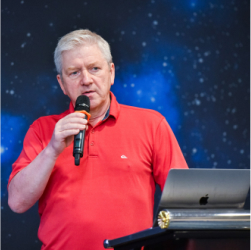
Doctor of Biological Sciences, Professor, Academician of the Russian Academy of Sciences with a degree in physical and chemical biology, Corresponding Member of the Russian Academy of Sciences with a degree in biotechnology.
One of the top 100 most cited Russian scientists.
Research interests include mechanisms of innate immunity, physiology of cytokines, reverse genetics and genome editing, mouse models of human diseases, and cancer antigens.
Includes world-class research activities at the nexus of physics, engineering, molecular biology, nano- and biotechnology, fine organic, inorganic and bioorganic synthesis, cell technologies, etc. In particular, work is underway to create smart nanobiomaterials of a new generation for in vitro diagnostics and promising medical applications.
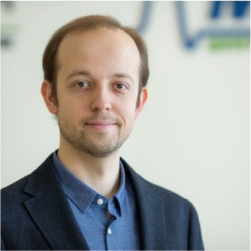
One of the pioneers in the development of "smart" nanomaterials based on hybrid ligand-dependent nanosystems operating on the molecular computing principles.
Laureate of the Presidential Prize of the Russian Federation in science and innovation for young scientists - 2017 "for the development of “smart” nanomaterials of new generation for biomedical applications and the development of foundations of autonomous biomolecular computing systems for theranostics".
Winner of Berlin Falling Walls Young Innovator 2016, the international competition for young innovators.
Winner of the international Biosensors Award 2016.
Member of the Council under the President of the Russian Federation for Science and Education (since April 2020).
Engaged in the creation of new varieties of agricultural plants with genome editing technologies. For example, one of the projects is aimed at obtaining the first domestic grape varieties with complex resistance to powdery mildew and gray rot. The Agrobiotechnology Resource Center operates unique equipment for working with plant cells, their genetic modification, as well as a set of climatic chambers for subsequent work with transformants.
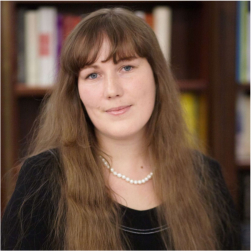
Doctor of Biological Sciences in Genetics, Professor of the Russian Academy of Sciences.
Director of N.I. Vavilov All-Russian Institute of Plant Genetic Resources, Federal Research Center, chairman of the Novosibirsk branch of Vavilov society of geneticists and breeders.
Member of the Federal Register of Experts in the Scientific and Technical Sphere of the Russian Federation, Member of the European Association for Research in Plant Breeding (EUCARPIA), Member of the Association of Scientific Editors and Publishers (ANRI).
Develops innovative functional materials based on nature-like and biodegradable systems for biomedical applications.
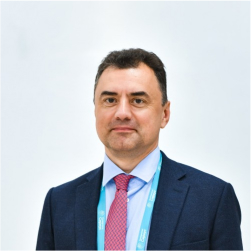
Advisor for scientific and innovative programs to the head of the Talent and Success Foundation.
One of the leading Russian experts in creating new functional materials for solar energy, biomedicine, and membrane technologies.
Scientific research in computer modeling of the structures and interactions of biological macromolecules and low molecular weight agents, creation of methods for the directed design of protein molecules with a given structure and properties, creation of original dynamic models for describing the pharmacokinetics and pharmacodynamics of original targeted drugs, development of new methods of analysis for genomic and transcriptome sequencing.
Research areas:
Develops new approaches to the creation of drugs for medical and veterinary use based on recombinant proteins and small molecules. Scientific and educational activities are focused on the design and optimization of new molecules, medicinal chemistry, in vitro and in vivo research of innovative drugs.
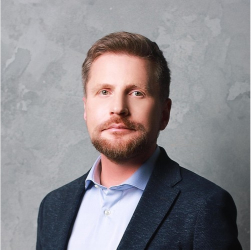
PhD in Molecular Immunology (University of Utrecht, Netherlands).
From 2005 till 2019 led development of BIOCAD – the biggest Russian biotech company, first as medical director, then as vice president for research and development. Supervised the creation of biosimilar and original monoclonal antibody-based drugs. Netakimab (anti-IL17) and prolgolimab (anti-PD1) became the first Russian original monoclonal antibodies-based drugs that have received market authorization.
Research areas:
Research activities aimed at improving technologies of recombinant viral vectors, creation of prototypes of biological products for the treatment of severe chronic diseases with a high commercialization potential, and educational activities in gene therapy and technologies for creating biotechnological drugs.
Objectives:
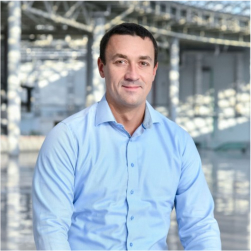
Co-author of several patents for the production of recombinant proteins (modified interferons and blood coagulation factors, trispecific antibodies), modified viral AAV capsids, new nucleases and alternative signaling domains in CAR-T cells.
Began his professional career at St.Petersburg State University in the laboratory of biochemical genetics and then in Biocad, the Russian high-tech pharmaceutical company, first as a director of the Department of Advanced Research (creation of phage display libraries of antibodies, protein engineering, the introduction of NGS and bioinformatics methods into the process of early development), and then as a director of the department for advanced research, within which a technological platform was created for the development of gene therapy drugs.
Research areas:
The Research Center conducts fundamental and applied research projects addressing the specific features of development and learning in children and adults. It further offers educational programs in pedagogy, psychology, and cognitive neuroscience.
The Center primarily focuses on expanding fundamental knowledge about the processes underlying the formation of personal agency and readiness for professional self‑determination at various stages of education, designing integrated educational curricula, and training highly qualified specialists capable of developing educational programs and environments that foster talented youth.
This program brings together specialists from various fields: clinical psychologists, psychophysiologists, developmental psychologists, geneticists, neurophysiologists, mathematicians, bioinformaticians, physicians, speech therapists, educators, and linguists. The program's work is based on a systemic, multi-level approach to the mechanisms of human development. It develops the concept of psychophysiological profiles, which can serve as the basis for objectively diagnosing atypical development and facilitate the development of a personalized approach in both education (including sports) and medicine. Psychophysiological profiles are multifactorial structures of neurophysiological parameters that characterize the characteristics of brain function at rest and in response to specific external stimuli, allowing for the link between the genetic and behavioral levels of a person's description.
The Psychological Service is a subdivision of the Scientific Center for Cognitive Research that provides psychological and pedagogical support to students, Sirius University staff, and external clients under signed agreements.
The Service's activities are aimed at ensuring the psychological well-being of educational participants within the Sirius scientific and educational ecosystem.
The scientific direction conducts fundamental and applied research on the development and learning characteristics of children and adults, as well as educational events for schoolchildren, students, and specialists of various profiles on topics related to the development of language and speech, the psychology of communication, interpersonal synchronization, and various aspects of scientific research.
Focuses on finding innovative solutions in financial technology. Studies financial markets, financial assets and instruments, trading volumes, price dynamics, and the risks of financial instruments for use in the financial industry, primarily in investment banking, asset management, brokerage services, and other fields.
Provides a Master's program in Financial Mathematics and Financial Technology.
Conducts research and creates modern robotic systems, based on the optimization and control theory, including artificial intelligence technologies.
Research areas:
Relevant projects:
Development of robotic approaches and AI algorithms for dynamic manipulation problems in service, industrial and medical applications.
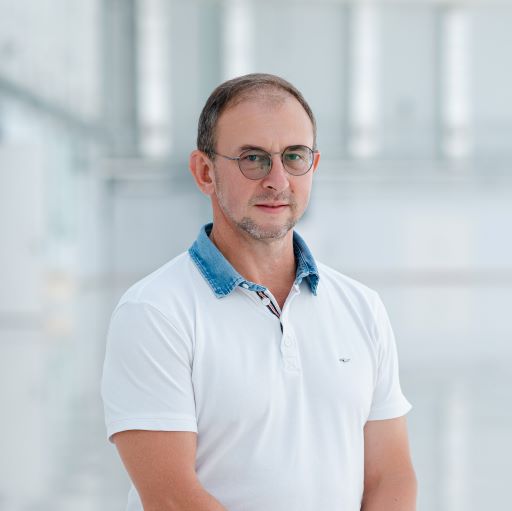
PhD, Doctor of Medical Sciences
Director, Research Center for Industrial and Agricultural Biotechnology
Sirius University of Science and Technology
The Research Center for Industrial and Agricultural Biotechnology at Sirius University was established as a strategic component of the scientific and technological development of the Sirius federal territory. It responds to the modern technological and economic challenges facing the nation in the fields of industrial biotechnology, food security, and sustainable growth of the agro-industrial complex. The Center’s key priority is close integration of educational programs with applied research and development.
The Center focuses on such priority research avenues as:
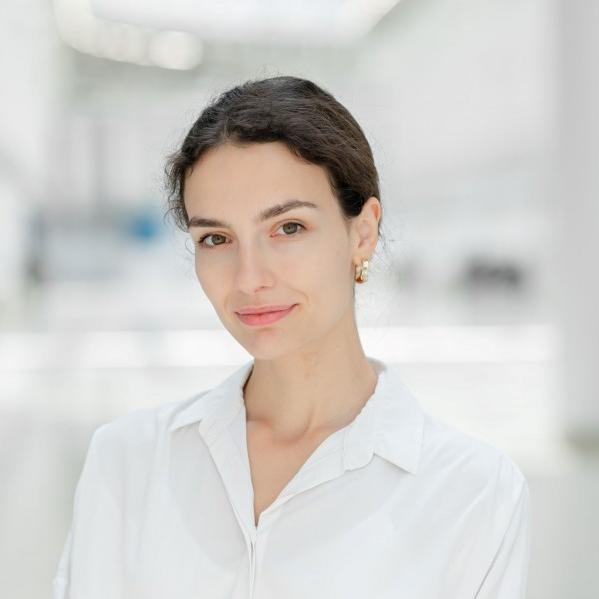
Director executive, International Research Center for Ecology and Climate Change
Sirius University of Science and Technology
Created on behalf of President of Russian Federation in 2022.
RESEARCH AREAS:
Sirius Federal Territory.
A special legal status allows to implement new ideas in education, science and high-tech manufacturing.
The status was granted on December 22, 2020.
Sirius strives to become an innovative, technological and educational hub of Russia.
 info@siriusuniversity.ru
  8 800 100 76 63 - 4436
354340, Russian Federation, Sirius Federal Territory, Olympic Ave., 1.